
How can parents affirm healthy sexual orientation in their children? The following interview with Dr. Randy Dellosa, a psychologist and psychiatrist and former professor at Asian Theological Seminary gives some answers to this complex question.

How can parents affirm a child’s normal sexuality?
It’s affirmed by giving them gender appropriate toys, complimenting them as they develop masculine or feminine traits, giving them responsibilities appropriate for their gender; and, living by example. Be their model.
What behaviors should parents or guardians watch for?
Parents should be aware of their own values with regards to sexual matters because, whatever they believe, the children will believe. They should monitor their child’s exposure to sexual information and sensual materials. Parents should have frequent dialogues with their children so that their attitude will be directed.
Parents should make sure the computer is placed in a common area so they can monitor what the children view. They should carefully look at the games and cartoons their children enjoy. Games and cartoons may have materials which are sexual in nature. Parents should read what their children are reading.
Parents should help their children develop balanced lives. Teens have the tendency to focus on sexuality when they’re idle. But when parents help them develop different interests, then sexuality becomes just a particular aspect of their lives, and things are placed in perspective.

What are some things to avoid?
Avoid exposing children to sensual materials. Sensual means it has connotation of passion and sexual behavior. In case there is exposure, it should be properly explained and guidance is needed.
Can peers influence one’s sexuality? How can parents help their children choose friends?
‘Yes. Parents may try to screen their friends and introduce them to people who their children can emulate.
What is the father’s role in the family?
‘The father should affirm the development their sons and daughters. Fathers should compliment their children. When children feel that they do not belong, they look for the sense of belonging outside the family. That’s when the child goes astray.

When should one seek professional help?
- When a person is confused and distressed about his or her sexuality.
- When a person experienced sexual trauma or violation in the form of incest or rape.
- When they have strong urges and do not know how to deal with it.
- Promiscuous behaviors.
- If they have questions that they’re too embarrassed to ask family or friends for fear of being judged.

Every parent has their child’s best interest in mind. Since we cannot live lives for our children, our only recourse is to pray for our children, maintain an open line of communication with them, guide them through instilling right values in them and live by example.


 While the perceived incompetence of police authorities in the handling of the hostage crisis was enough to anger the people, what incensed them further was the appearance of pictures of Filipino students and policemen having their pictures taken beside the doomed bus.
 ‘JUST ACTING THEIR AGE’
 “Young Filipinos need to be exposed to the hardships and sufferings of their fellow Filipinos. When the youth become conscious of how others are in need, this may awaken their desire to empathize with others, instead of just thinking about themselves,” he says.
 “Values are what individuals deem as personally important for themselves. Virtues, on the other hand, are commendable traits or qualities which are meant for the common good of all people,” he explains. “When teens are ‘virtuous,’ they become more concerned about the welfare of others act to uplift the plight of those in need.”
 Hostage trauma
 A country's duty
 An objective view of Aguilar’s actions would show that “to some degree, her actions were an exemplary, commendable display of unconditional love,” according to Randy Dellosa, a clinical psychologist and psychiatrist.
 “A mother’s love should be limitless,” Dellosa explained. “But it doesn’t mean condoning the child’s mistakes because helping or getting help for the child, imposing disciplinary actions on him, is also a sign of limitless love.”


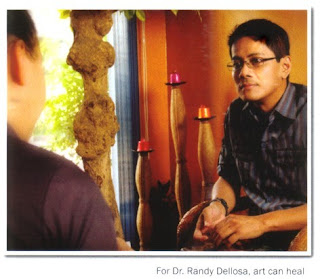


 He also thinks that this trend is more evident today because Filipinos have been repressed for so long. There were expectations to conform and not to speak up. “Historically, nandun na rin yung martial law, which was very repressive and pushed for conformity. After the 1980’s, nung nawala na si Marcos doon nag-boom yung opportunities for self-expression,” he relates.
 It also ties up with what’s happening economically. Parents are leaving as OFWs and children are being left on their own. And so the need for acceptance and belongingness is going to be met from outside of the family, so they will turn to their friends. Posting themselves on these sites and then receiving acceptance, that’s an opportunity to get the acceptance that they need,” Dr. Dellosa continues.
 Assuming that these kids’ parents are not around for them, Dellosa thinks that the schools should step up as they need to have greater awareness of this issue.